What Makes Online Nursing Continuing Education Worth a Nurse’s Time?
I think most nurses have lived through some version of the same continuing education experience. You sit down already tired, open the course, and within minutes you’re staring at a bland slide deck while a monotone voice reads information you could’ve read faster on your own. The slides are crowded, the graphics are forgettable, and nothing about the experience makes you feel more prepared for practice. You’re not learning. You’re enduring it.
That’s the problem.
Nurses don’t need to be convinced that learning matters. We already know that it does. We work in environments where clinical judgment, communication, and up-to-date knowledge can change outcomes. What we don’t need is more continuing education that feels like a box to check instead of an opportunity to grow.

Good online nursing continuing education should do more than fill a requirement. It should make the learner think, confirm what she knows, strengthen what she doesn’t, and leave her with something she can actually use. If it doesn’t do that, it may technically count as education, but it probably won’t feel worth the time.
Nurses Aren’t Avoiding Learning. They’re Avoiding Wasted Time
When nurses disengage from continuing education, it’s easy to assume they’re unmotivated or just trying to get through it as fast as possible. I don’t think that’s the full story. Most nurses care deeply about learning, but they also know what it feels like to have their time wasted.
A course loses people quickly when it feels stale, repetitive, or disconnected from real practice. If the information is outdated, if the speaker sounds like they’re reading every word directly from the screen, or if the content never moves beyond basic facts, the learner checks out. It isn’t because nurses don’t value education. It’s because they know the difference between education that supports practice and education that simply occupies time.
That distinction matters even more now. Nurses are balancing work, family, fatigue, stress, and professional expectations. When they carve out time for continuing education, they deserve something that respects the value of their attention.
Good CE Should Feel Like Someone Is Actually Teaching You
One of the biggest problems with online education is that too much of it feels lifeless. There’s a difference between presenting information and teaching it. A course can include accurate facts and still fail as a learning experience if the content is delivered without energy, context, or purpose.
Good education should feel like someone is guiding the learner through the material, not just reading slides aloud. The speaker doesn’t need to be flashy, but the teaching should feel intentional. The learner should be able to tell that someone considered what matters most, what might be confusing, and what needs emphasis.
That’s especially important in nursing education because so much of what we do depends on judgment. Nurses don’t just memorize information. We compare, notice, question, prioritize, and act. Education that delivers facts without helping the learner think through them misses a big part of what nursing actually requires.
Slide Design Matters More Than People Think
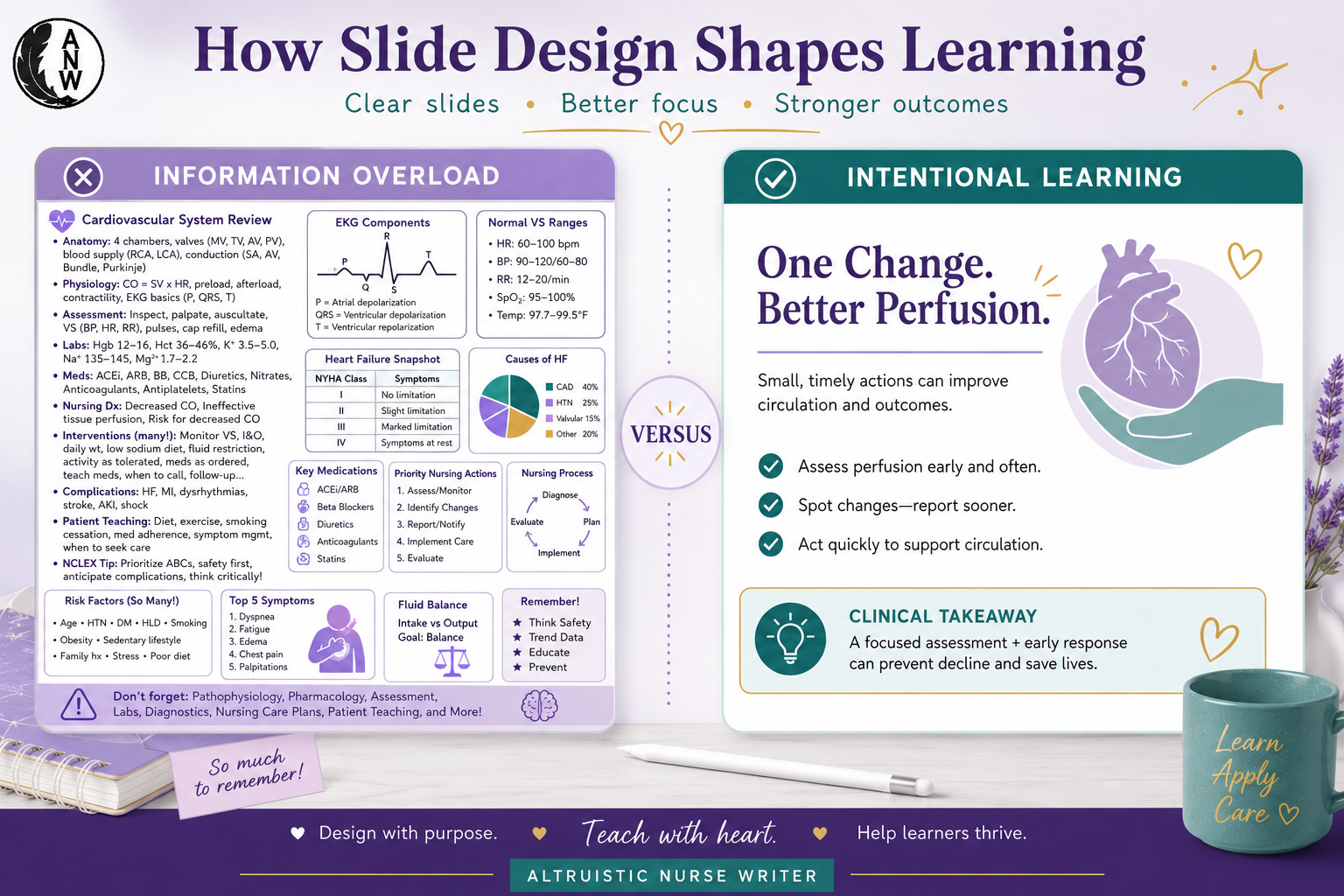
A crowded, dull slide deck can ruin even good content. When a screen is overloaded with text, cluttered graphics, or tiny details, the learner has to work too hard just to figure out where to look. Instead of supporting learning, the slide becomes another obstacle.
Good slide design doesn’t mean the course has to be fancy. It means the visuals should help the learner focus. The main point should be easy to identify. The layout should be clean. The graphics should add meaning instead of decoration. A well-designed slide helps the nurse absorb information without feeling mentally drained after five minutes. This isn’t just a matter of taste. Research in health professions education has found that applying multimedia design principles to lectures improves learning outcomes.
That matters because online learning already asks a lot of the learner. If the visuals are boring, confusing, or repetitive, the content has to work even harder to hold attention. When the design is clear and intentional, it makes the learning experience feel more engaging and more respectful.
Nurses Need More Than Repetition of the Same Old Information
Another reason continuing education falls flat is that it often repeats information without adding anything new. Sometimes the learner finishes a course and feels like she has heard the same general points she has heard for years, just with a different title screen.
That’s frustrating because nurses aren’t only looking for a reminder. They’re looking for education that feels current, relevant, and clinically useful. They want updates, stronger context, and a reason to keep paying attention. They want to know what has changed, what deserves renewed attention, and what to watch for in practice.
That doesn’t mean every course has to introduce groundbreaking new research. It does mean the content should feel fresh enough to matter. Even when the topic is familiar, the teaching should offer a clearer explanation, a more practical angle, or a better way to apply the information than the learner has encountered before.
Worthwhile CE Should Challenge the Learner a Little
One of the clearest signs that a course is worth the time is that it actually makes the nurse think. Good continuing education shouldn’t just present facts and move on. It should challenge her to pause and ask herself whether she truly understands the material.
That’s where realistic examples, scenarios, and knowledge checks become valuable. They don’t need to feel like trick questions, but they should give the learner a chance to verify that she can use the information. Could she recognize the pattern? Could she identify the risk? Could she explain it clearly to a patient or another clinician? Could she act on it during the next shift? Research supports this too. In one study of continuing medical education courses, adding repeated quizzing significantly improved long-term retention compared with the courses alone.
When education invites that level of thinking, it becomes more than passive review. It becomes preparation.
Practical Application Is What Makes Learning Stick
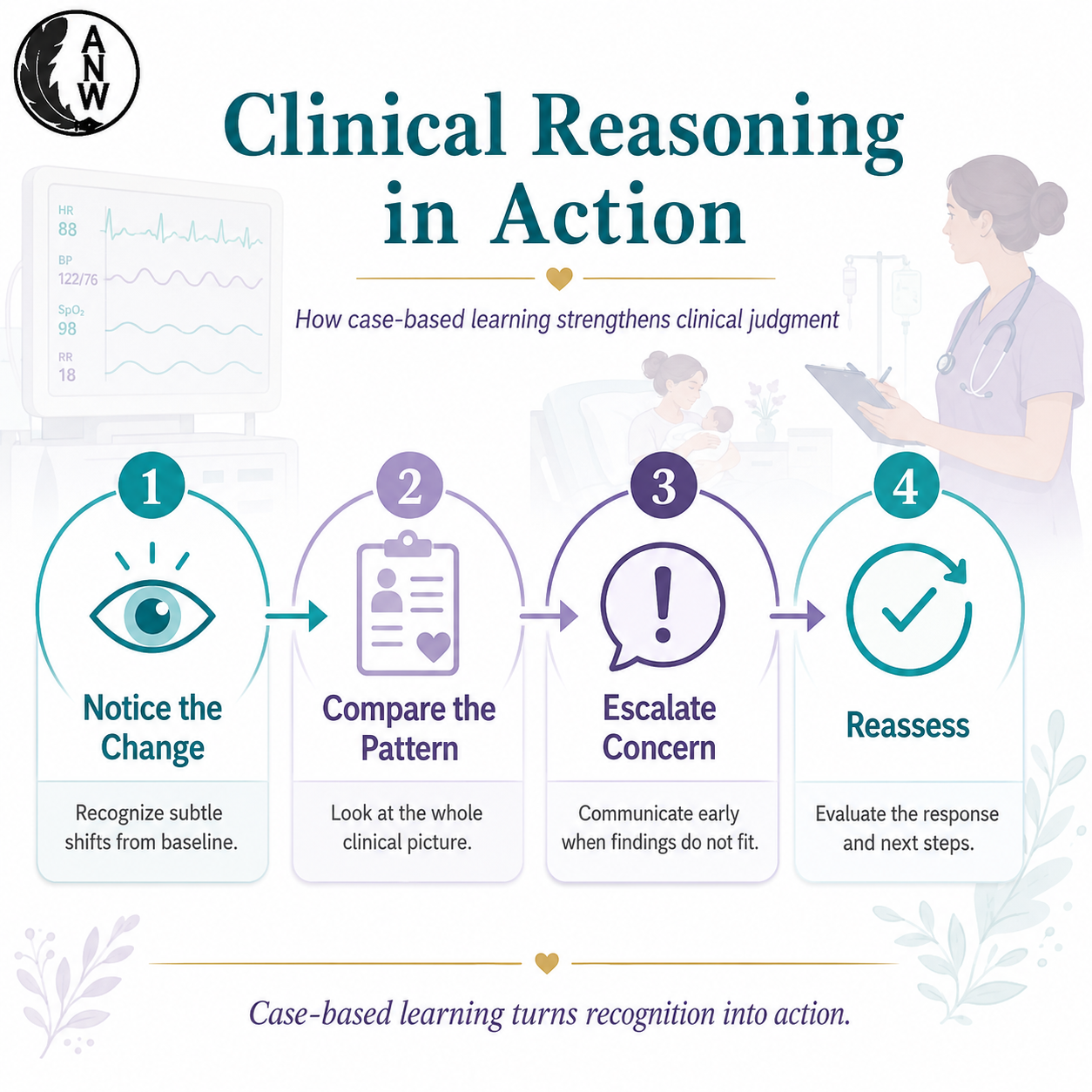
Nursing education is most effective when it connects directly to practice. The learner should be able to finish a course and say, “I can use that.” That may mean she leaves with better language for communicating with patients, greater awareness of safety concerns, more confidence recognizing a clinical change, or a clearer understanding of what deserves escalation.
That practical connection is what separates meaningful CE from generic content. A good course doesn’t just explain a topic. It helps the nurse understand how the information fits into a real patient encounter, a conversation, or a real decision.
This is one reason I believe nurse-led education matters. Nurses know what it feels like to be the learner after a long shift. We know how quickly education loses value when it becomes abstract, overloaded, or disconnected from bedside reality. We also know how powerful it is when education gives a nurse language, clarity, and confidence she can actually carry into practice.
This Matters for Organizations Too
This conversation isn’t only about individual learners. Healthcare organizations and nurse educators should care about this too. When education is dull, outdated, or poorly designed, staff may complete it, but that doesn’t mean the learning changed anything. Compliance may be met, yet the opportunity to truly strengthen practice is lost.
Organizations invest time and money in education to achieve safer care, stronger teams, and more confident clinicians. That goal is much more likely to be met when the education is engaging, relevant, and well-designed. Staff are more likely to retain information when it is clearly taught, visually accessible, and tied to actual practice. They’re more likely to respect the educational process when it feels worthwhile rather than performative.
Nurse educators face the same challenge. They aren’t just responsible for delivering content. They’re responsible for helping people learn. That means thinking not only about what information should be included, but also how it should be taught so the learner can absorb it and use it.
What I Believe Nurses Deserve
I don’t think nurses need more busywork disguised as education. I think they deserve learning that is engaging, current, practical, and respectful of their time. They deserve courses that feel like they were built by someone who understands how nurses actually learn and what they need from the experience.
That belief shaped the way I approached my own continuing education courses. I wanted the information to be current and clinically grounded, but also clear, visually engaging, and useful. I wanted the learner to feel taught, not talked at. I wanted the course to confirm what she knows, challenge what she doesn’t, and leave her better prepared than she was before she clicked “start.”
That doesn’t require flashy gimmicks. It requires thoughtful teaching. (I wrote more about this in Why Nurses Deserve Better Continuing Education.)
Continuing Education Should Be Worth the Time
Nurses spend their time on many things that don’t always give much back. Continuing education shouldn’t be one of them.
If a course asks for a nurse’s attention, it should honor that attention. It should bring current information, meaningful teaching, and practical value to the table. It should help the nurse think more clearly, act more confidently, and carry something useful back into practice.
That is what makes online nursing continuing education worth a nurse’s time.
If you’re looking for nurse-led courses that are practical, current, and clinically relevant, explore my continuing education courses.