Medical Lemons: Building a Nurse-Led Business Through an Unplanned Season
Sometimes life hands you a lemon. Other times, it backs an entire produce truck into your kitchen, unloads every crate onto the counter, and drives away before you can ask where the receipt went. The past two years have felt much closer to the second version.
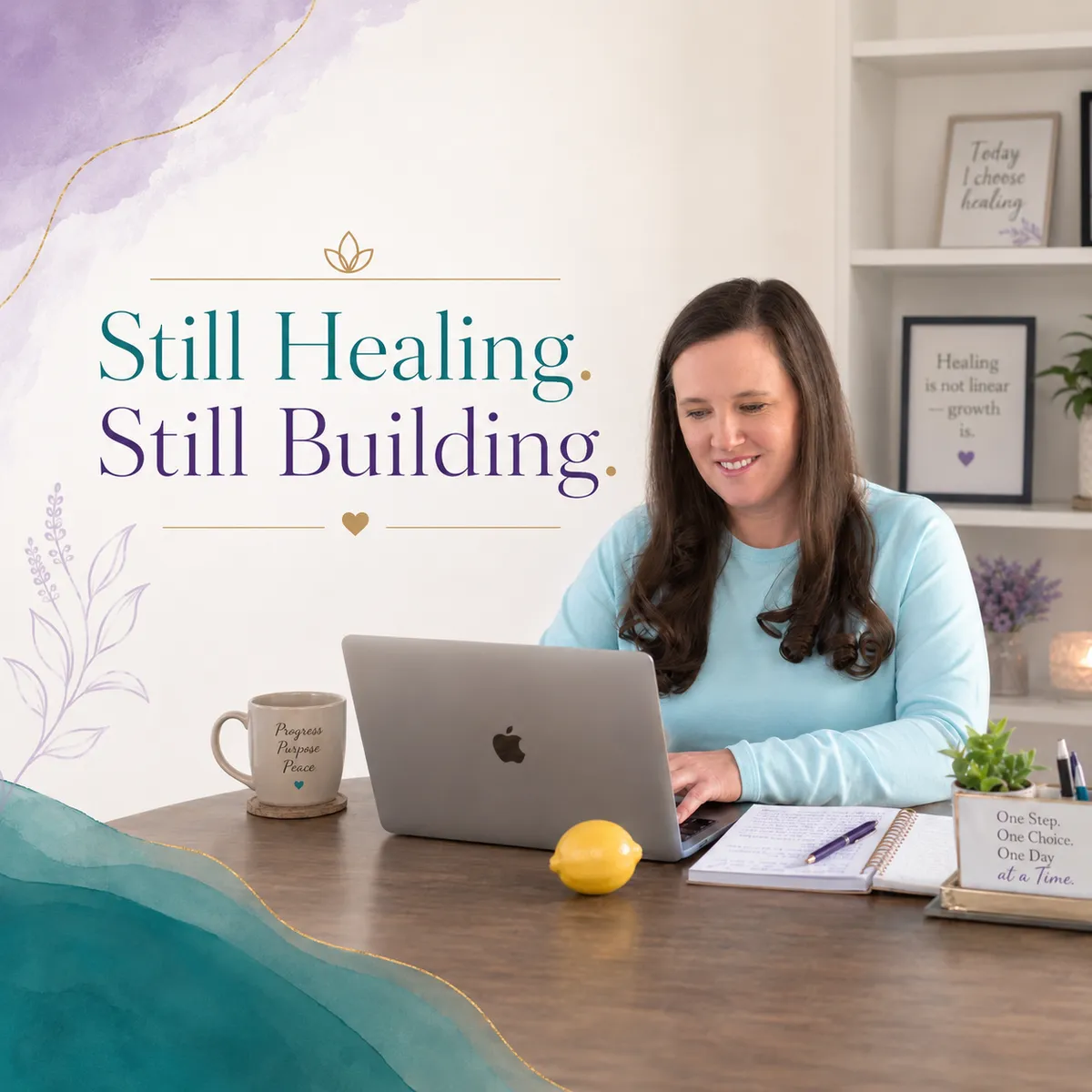
I’ve been quieter online at different points, but it wasn’t because I stopped caring about my work or ran out of ideas. I was trying to manage one medical problem after another while continuing to care for my family, recover physically, and build Altruistic Nurse Writer whenever my energy allowed it. What began as a hip injury in April 2024 became a medical season I never could’ve planned. At the same time, the work I began during that season gave me something I desperately needed while so much of my normal life felt uncertain: purpose.
When Recovery Refuses to Follow the Plan
When I first injured my hip, I expected the recovery to be relatively straightforward. I thought I would complete treatment, regain my strength, and return to work. Instead, the pain worsened. Physical therapy aggravated some of my symptoms, injections didn’t provide the relief I needed, and imaging eventually revealed a significant labral tear. Then I developed shingles on the same hip, because apparently one medical problem at a time would’ve been far too organized.
As the months continued, the timeline became more complicated. I developed supraventricular tachycardia and was later diagnosed with Wolff-Parkinson-White syndrome, which led to a cardiac ablation. I also experienced a ruptured hemorrhagic ovarian cyst that caused significant internal bleeding, worsening autoimmune symptoms, chronic sinus problems, and additional procedures. Each issue brought new appointments, new decisions, and another adjustment to the recovery plan I had originally imagined.
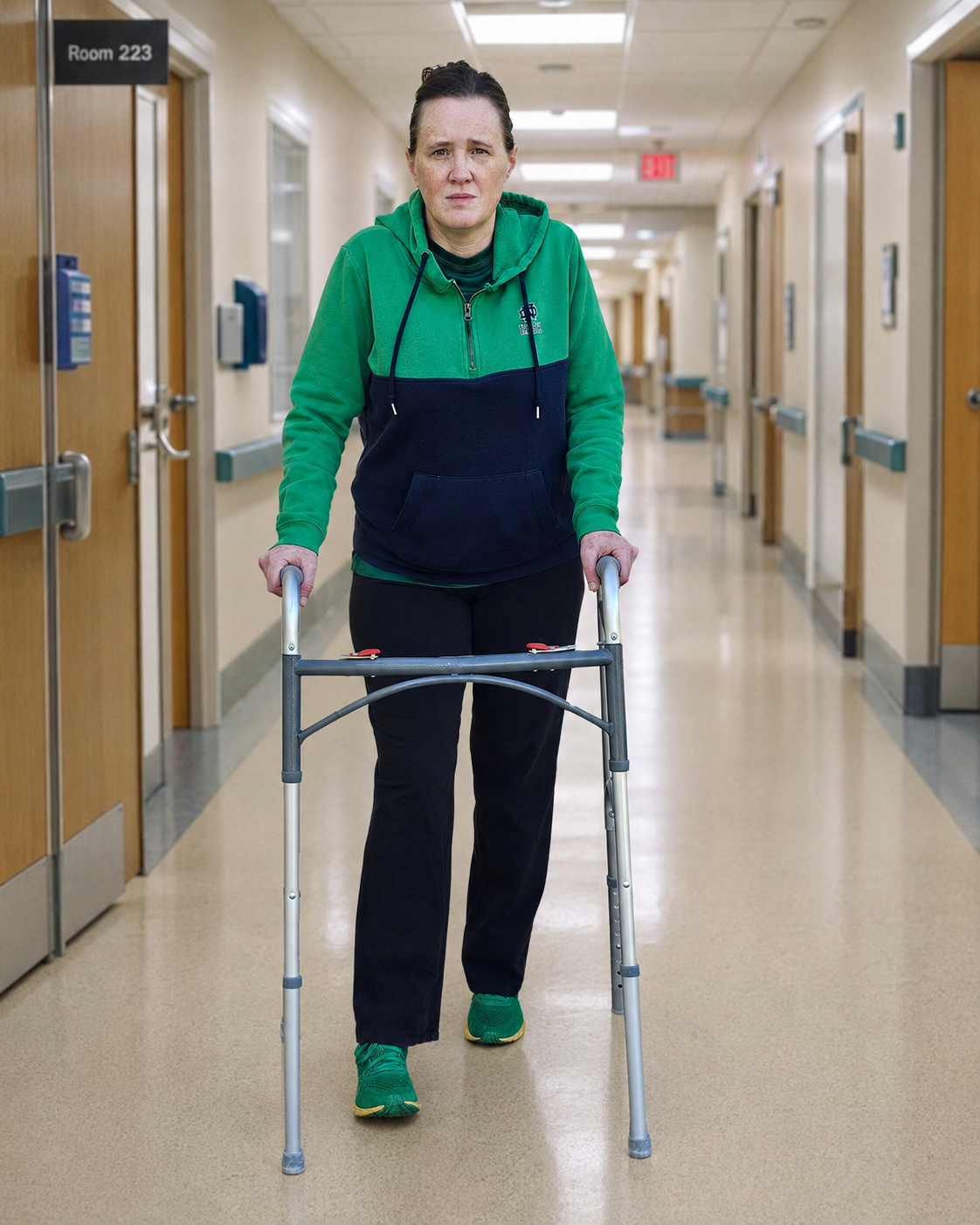
While I was trying to manage my own health, the rest of life didn’t pause. My husband experienced serious complications following knee replacement surgery, and I found myself moving between the roles of patient, caregiver, wife, mother, and nurse. Nurses understand that strange overlap. Becoming the person who needs care doesn’t automatically remove you from the list of people everyone else depends on. Clinical knowledge may help you understand what’s happening, but it doesn’t protect you from fear, exhaustion, or the emotional weight of watching someone you love struggle.
I did attempt to return to work, but the attempt was brief. My body made it clear that I wasn’t ready, and I returned to appointments, therapy, and the ongoing process of trying to regain strength and function. That experience was difficult because I never stopped thinking of myself as a bedside nurse. I still don’t.
I remain hopeful that I’ll return to bedside nursing in some way, shape, or form. I don’t know exactly what that will look like yet, and I don’t need to force an answer before my health and circumstances are ready to give me one. Altruistic Nurse Writer wasn’t created because I decided bedside nursing no longer mattered to me. It grew because I needed a meaningful way to continue using the clinical knowledge, teaching experience, and professional perspective I had spent more than two decades developing.
Finding Purpose Through Healthcare Writing
During recovery, I began exploring healthcare writing more seriously. I had always valued clear communication and patient education, and I knew how much harm could occur when medical information was technically accurate but confusing, incomplete, or disconnected from the realities of clinical care. Healthcare professionals need content they can trust, and patients need information they can understand without losing the meaning, nuance, or seriousness of the subject.
I joined WriteRN’s PPP program and began learning how nursing knowledge could be translated into healthcare content, professional education, patient resources, and continuing education. The work didn’t feel separate from nursing. It felt like another extension of it.
Nurses translate complicated information every day. We listen for what patients and families are really asking, even when they don’t have the words to ask it clearly. We explain diagnoses, procedures, medications, warning signs, and discharge instructions in ways that people can understand during some of the most stressful moments of their lives. We also recognize where communication breaks down and how those gaps can affect safety, confidence, trust, and decision-making.
Healthcare writing gave me a way to continue doing that work outside a patient room. It reminded me that nursing experience doesn’t disappear simply because a nurse isn’t physically standing at the bedside. The knowledge remains. The stories remain. The instinct to teach, advocate, notice what’s missing, and help people understand remains.
Most importantly, the work gave my experience somewhere to go. During a season when my body was limiting many of the things I was accustomed to doing, writing allowed me to continue contributing. It gave structure to days that might otherwise have been consumed entirely by appointments, pain, fatigue, and uncertainty.
The Medical Timeline Kept Growing
In April 2026, I underwent a total right hip replacement. The surgery itself was successful, but the postoperative course didn’t go as planned. My blood pressure dropped dangerously low and remained low for several hours. What was expected to be an outpatient procedure became a five-day hospitalization, and the prolonged hypotension caused liver injury.
During the imaging completed as part of that evaluation, a mass was discovered on my left kidney. Further testing ultimately led to a diagnosis of renal carcinoma. There’s no polished or clever way to package that kind of news. By that point, the medical list already included a torn labrum, shingles, SVT, WPW, cardiac ablation, a hemorrhagic ovarian cyst, an autoimmune connective tissue disorder, sinus surgery, hip surgery, a failed attempt to return to work, total hip replacement, and serious postoperative complications. Renal carcinoma became another crate added to the produce truck.
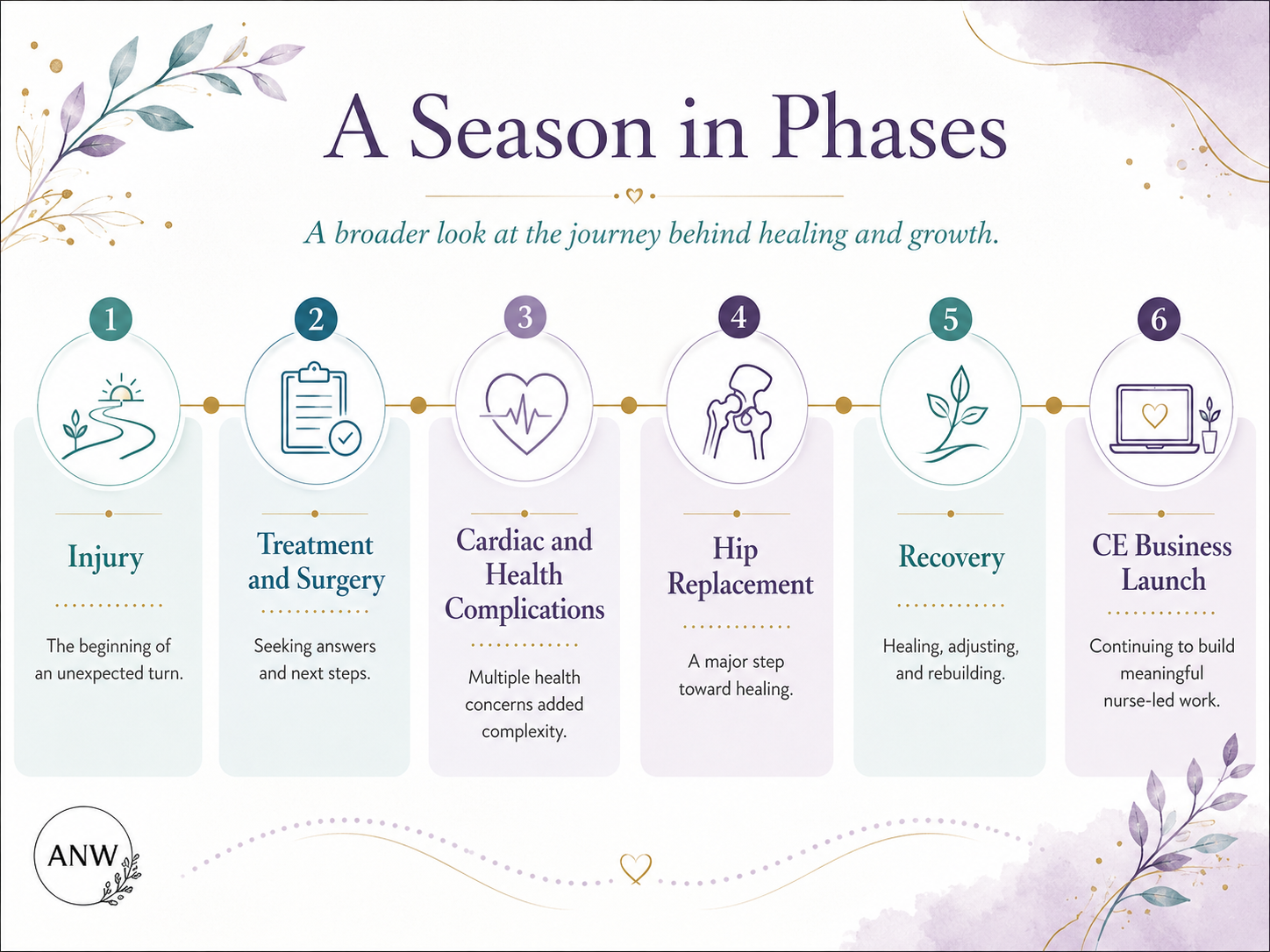
Some medical experiences are difficult enough on their own. The accumulation creates a different kind of exhaustion. You aren’t processing a single diagnosis or a single recovery. You’re constantly rearranging appointments, responsibilities, expectations, finances, family needs, and your picture of the future. Just as one problem begins to feel manageable, another test result, symptom, or appointment appears, shifting the ground again.
There’s also an emotional tension that comes with trying to build something meaningful while your body keeps demanding more attention. Part of you wants to keep moving forward, while another part needs rest, medical care, and permission to admit that the situation is frightening. I had to learn that both realities could exist without canceling each other out.
Building in Pieces
Throughout that medical season, I continued working on Altruistic Nurse Writer, but progress didn’t always look impressive from the outside. Some days I revised one lesson from the couch. On other days I recorded a few minutes of narration and stopped when fatigue took over. I reviewed references, corrected links, redesigned slides, learned course-platform functions, and developed resources in whatever pieces my concentration and physical energy would allow.
The work happened slowly, unevenly, and often between medical appointments. That was difficult for me because nurses are trained to respond, organize, prioritize, and keep moving. We become accustomed to measuring progress through completed tasks, solved problems, and visible outcomes. Slow progress can feel too much like stalled progress, even when it isn’t.
I had to learn that one completed section still counted. One recorded lesson still counted. One carefully made decision still moved the business forward. I didn’t have to build the entire company in one heroic stretch for the work to be legitimate. There were days when the most productive thing I could do was rest so I could return to the work later with a clearer mind.
Healing and business-building happened side by side. Neither followed a straight timeline. There were bursts of productivity, periods of interruption, small victories, setbacks, and repeated recalculations. The business grew not because the medical problems disappeared, but because I kept returning to the work when I could.
Becoming a Continuing Education Provider
One of the most significant steps was becoming an approved continuing education provider through the Florida Board of Nursing. That approval transformed the idea of creating nurse-led education into something tangible. I wasn’t only writing about the kind of education I believed nurses deserved. I could begin developing and offering it.
The courses grew out of gaps I had seen throughout my nursing career. Nurses need more than information placed on slides and read aloud. They need education that helps them recognize patterns, communicate concerns, support patients and families, and respond with greater confidence when clinical situations change. They also need education that respects their intelligence, acknowledges the emotional reality of nursing, and connects knowledge to the decisions they make in actual practice.
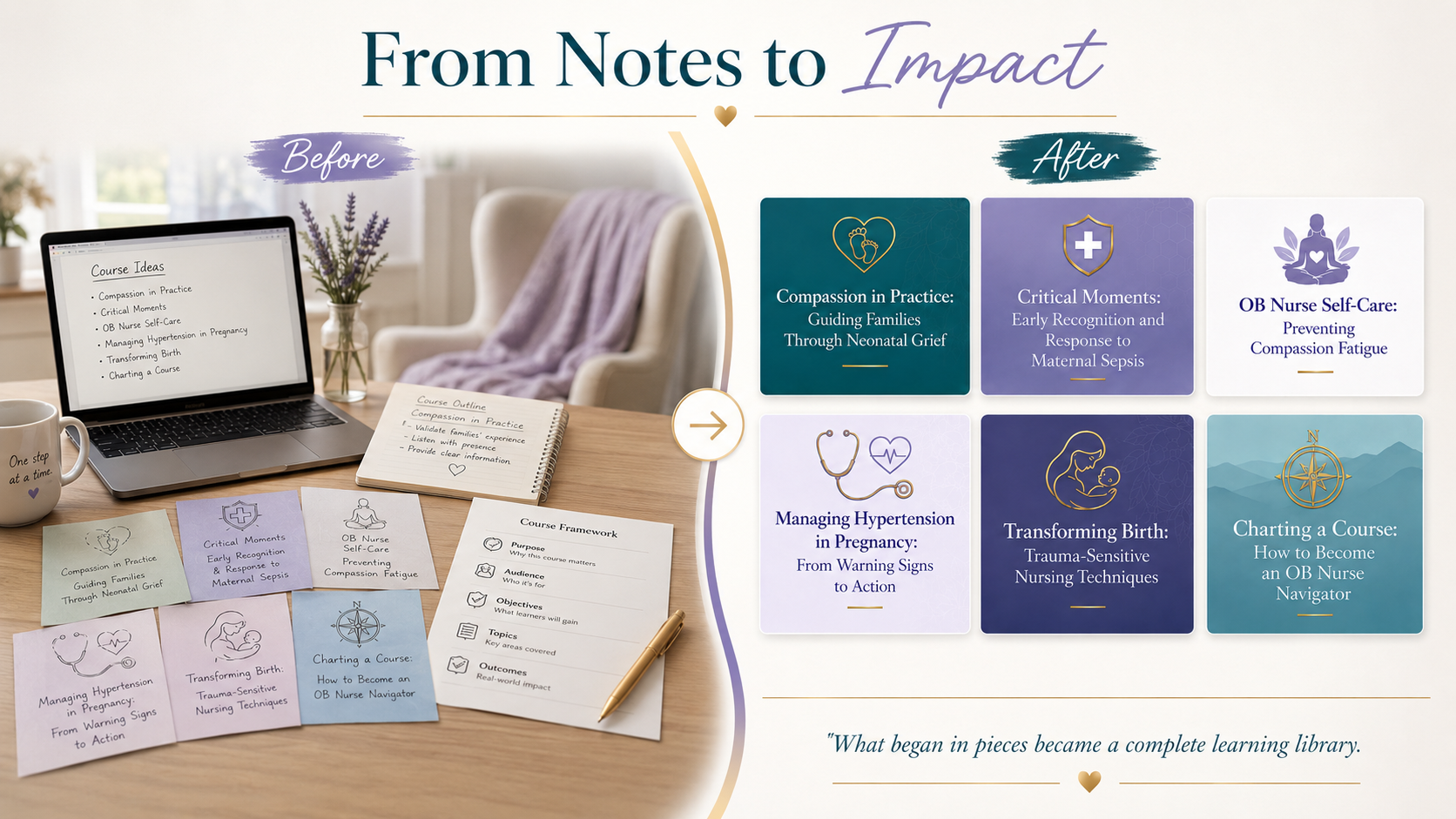
That belief shaped six courses focused on neonatal grief, maternal sepsis, compassion fatigue, hypertension in pregnancy, trauma-sensitive obstetric care, and the OB nurse navigator role. Each one began as scattered notes, clinical memories, research articles, learning objectives, scripts, and unfinished slides. Gradually, those pieces became complete learning experiences.
The process required far more than writing the course content. It involved research, regulatory requirements, visual design, narration, video creation, assessments, evaluations, accessibility considerations, platform testing, and hundreds of small decisions learners will probably never notice. That’s the goal. A finished course should feel clear and easy to navigate, even when creating that clarity required an enormous amount of invisible work. (I shared more about that process in What It Really Took to Build Six Nurse-Led Continuing Education Courses.)
Purpose Without Pretending Everything Was Fine
Altruistic Nurse Writer didn’t fix my medical problems. The business didn’t make recovery simple, erase fear, or transform every difficult experience into an inspirational lesson. Some parts of this season were simply hard, and I don’t believe every painful event needs to be wrapped in a cheerful message about gratitude or personal growth.
What the work gave me was purpose.
It gave me something meaningful to build on days when my body wouldn’t let me do what I had expected. It reminded me that I could still contribute to nursing education, support other nurses, and use my experience, even as my own future remained uncertain. Purpose didn’t require me to pretend everything was fine. It simply gave me a reason to keep creating even when everything wasn’t fine.
That distinction matters because meaningful work and difficult emotions can exist together. A person can feel frightened by a diagnosis and still feel excited about completing a course. She can grieve the life and timeline she expected while also feeling proud of something new she has created. She can hope to return to the bedside while building another way to serve nurses, patients, families, and healthcare organizations.
The business wasn’t a replacement for nursing. It was nursing knowledge taking another form.
Still Healing, Still Building
The courses that once existed as scattered notes, scripts, recordings, beta tests, and folders on my computer are now live. Altruistic Nurse Writer has grown into both a healthcare writing business and a nurse-led continuing education provider. It supports clear, ethical healthcare communication while offering practical education grounded in the realities of clinical practice.
What began during recovery evolved into a complete course library, professional writing services, educational resources, and a platform I can continue developing. That doesn’t mean I’ve closed the door on bedside nursing. It means I’ve created another door through which my nursing experience can continue serving people.
Nursing has never been limited to a single location or role. Nurses teach, write, lead, advocate, develop programs, conduct research, improve systems, mentor others, and create resources that strengthen patient care. The bedside remains part of who I am, and so does this work.
I’m still navigating the medical side of this story. The renal carcinoma diagnosis added another layer of appointments, decisions, and uncertainty to a season that was already complicated. I’m also still building, and those two realities can exist together.
A person can be afraid and purposeful. Recovery can be incomplete while meaningful work continues. Progress can move more slowly than expected and still be progress. I didn’t disappear. I was simply under a pile of medical lemons, trying to protect my energy, care for the people I love, make thoughtful decisions about my health, and build something useful during a season I never chose.
Sometimes life doesn’t hand you one neat little lemon. Sometimes it backs up the whole produce truck. When that happens, you may not be ready to make lemonade right away. You may need time to clear the counter, catch your breath, and figure out where to begin.
I began with one lesson, one page, and one idea at a time. I’m still healing, still learning, still hoping to return to the bedside in some form, and still building.
Learn more about Altruistic Nurse Writer’s healthcare writing services or explore the nurse-led continuing education courses.