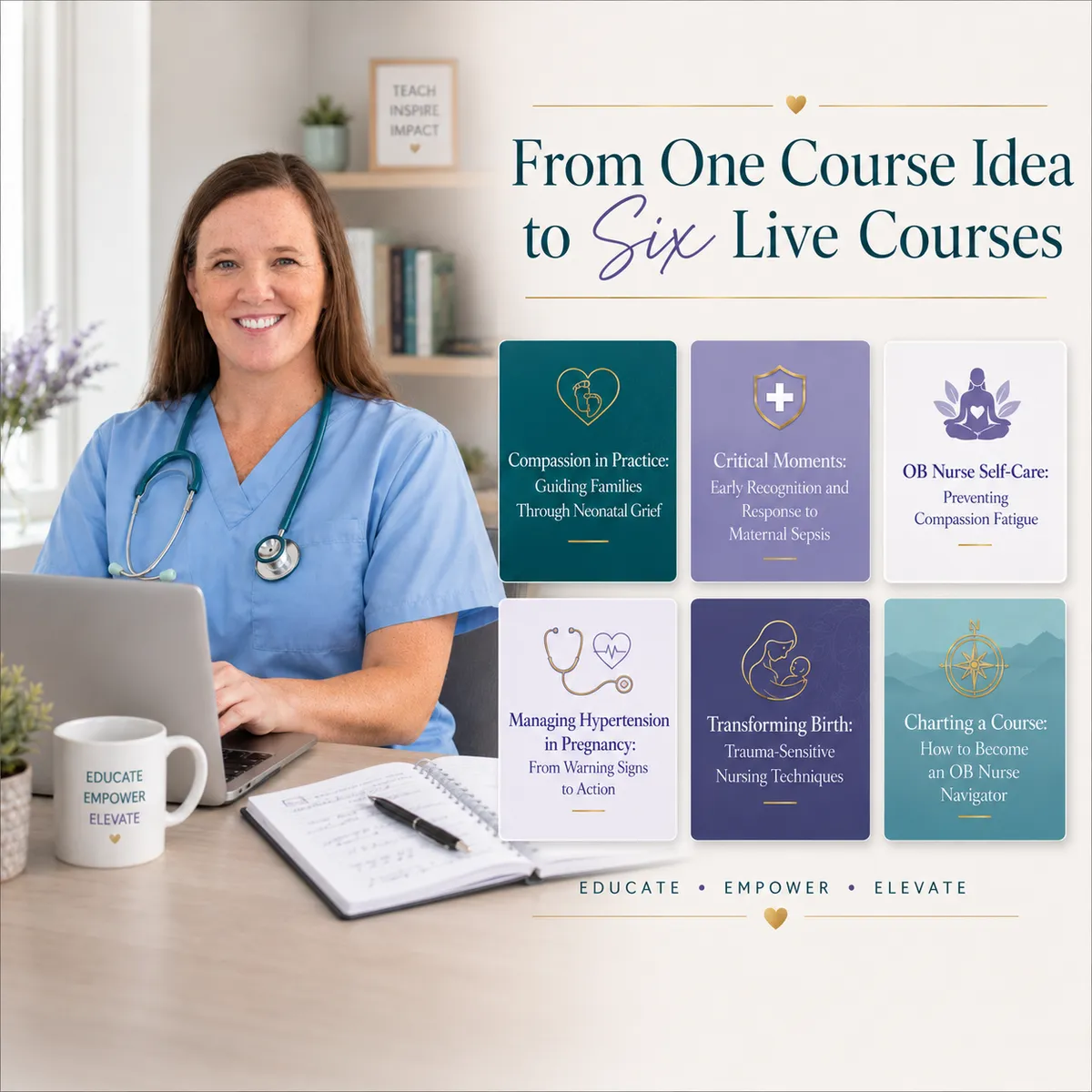
What It Really Took to Build Six Nurse-Led Continuing Education Courses
A finished online course can look deceptively simple. The learner logs in, watches the lessons, answers the questions, completes the evaluation, and receives a certificate. When everything works the way it should, most people never see the hours spent writing, recording, revising, uploading, testing, and correcting what happens behind the screen.
That’s exactly how it should be. The learner shouldn’t have to notice the machinery.
What they also wouldn’t see is that I was building my first courses during a season when my own life was moving anything but smoothly. I was recovering from a procedure that required more time and energy than I’d expected, while family responsibilities, household stress, children, and everyday life continued around me. At one point, I delayed a newsletter rather than rushing it because I needed to create space for recovery without abandoning the business’s direction. The educational content was taking shape, but the learning platform, payment systems, course structure, and final course components still had to work together before anything could go live.
The process wasn’t simply about writing six courses. It was about turning six ideas into complete learning experiences that nurses could enter, understand, finish, and use.
The Course Content Was Only the Beginning
When I first began building the courses, I assumed the largest part of the work would be researching and writing the educational content. That was certainly a major part of it, but it wasn’t the finish line.
Each course needed clear learning objectives, current supporting evidence, a logical structure, appropriate disclosures, teaching materials, narration, post-test questions, rationales, evaluations, and completion requirements. The content also had to fit the allotted contact time and meet the expectations of an approved continuing education provider.
Then the course had to function inside the learning management system.
The modules had to appear in the correct order. The videos had to load. The learner needed to know what to do next without having to search for instructions. The post-test had to score correctly, the evaluation had to appear at the appropriate point, and the certificate process had to work after all course requirements were completed.
A course can contain excellent information and still frustrate the learner if the surrounding system is confusing. That made the technical details part of the educational experience, not something separate from it.
The Videos Took the Most Work
The videos were easily among the most time-consuming parts.
I wanted the narration to sound natural, but I also needed the slides to support what I was saying. They couldn’t feel like two separate lessons happening at the same time. The words, images, pacing, and transitions needed to match closely enough that the learner could follow the teaching without becoming distracted.
At first, that process felt painfully slow. I’d revise a slide, record the narration, listen back, notice the visual didn’t quite fit, and return to the slide. Sometimes the narration was too long. Sometimes the slide contained too much information. Other times, the content was accurate but didn’t sound natural when spoken aloud.
There’s a significant difference between writing something that reads well and writing something that sounds like a real nurse is teaching it. I didn’t want the courses to feel like someone was reading a textbook over a slideshow. I wanted the learner to feel guided through the topic by someone who understood both the clinical material and the realities of nursing practice.
That required repeated revisions, but it also helped me create a stronger system. Once I figured out how to write the narration, design the slides, record the videos, and review the final lesson in a consistent order, the process began to flow more smoothly.
The work didn’t disappear. I simply stopped rebuilding the process every time I started a new module.
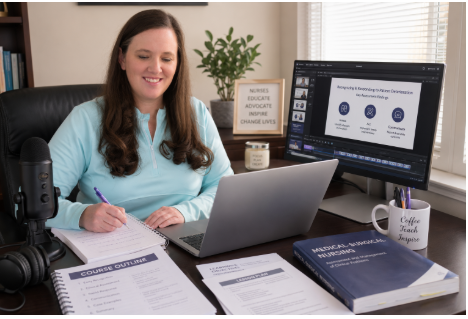
Building Six Courses at Once Wasn’t the Most Efficient Plan
I didn’t create one course, finish it completely, and then move on to the next. I worked on all six courses at the same time.
That meant I might be writing a post-test for one course, revising slides for another, recording narration for a third, and uploading content for a fourth. It wasn’t always the cleanest approach, but it reflected how the ideas had developed. Each course addressed a different gap I’d seen in obstetric nursing, and I wanted to move forward with all of them.
The six courses focused on neonatal grief, maternal sepsis, compassion fatigue, hypertension in pregnancy, trauma-sensitive obstetric care, and the OB nurse navigator role. Each topic required a different emotional and educational approach. A neonatal grief course couldn’t be taught with the same tone as a maternal sepsis course. A course on compassion fatigue needed to feel supportive without becoming vague. A course about clinical deterioration needed to create urgency without overwhelming the learner.
Developing them together allowed me to create consistency across the collection, but it also meant there were a lot of moving parts on my screen and in my head.
For a while, progress felt slow because I was trying to build the courses while also managing everything happening around me. I’d work when I could, stop when life required it, and return to whatever piece was waiting.
Once I reached a point where I could focus almost entirely on finishing the courses, everything changed.
Three Focused Weeks Changed Everything
When I finally had the time and space to concentrate on the courses, I worked about six hours a day for roughly three weeks. During that period, I could stay in the flow rather than repeatedly stopping to remember where I’d left off.
The system I’d spent so much time developing began to work for me.
I knew how I wanted each lesson structured. I had a better method for matching the narration to the slides. I understood how the courses needed to be organized inside the platform. I’d already learned which details were likely to cause problems and what needed to be tested before a course could be considered complete.
All six courses were finished and live by the end of that focused period.
From the outside, it might’ve looked like the courses appeared quickly. In reality, those three weeks were possible because of everything that had happened before them. The research, drafts, revisions, technical learning, mistakes, and unfinished pieces had been accumulating for months.
Focused work didn’t replace the earlier process. It brought all of it together.
Perfection Was Slowing Me Down
One of the most important things I had to learn was that I couldn’t perfect every detail forever.
That didn’t mean lowering my standards. The information still needed to be accurate. The courses still needed to be professional, functional, and useful. But there’s a point when continued editing stops improving the work and starts preventing it from reaching the people it was created to help.
I could always find another sentence to revise, another image to adjust, or another transition to reconsider. Because I cared so much about the quality of the courses, it was easy to convince myself that one more revision was necessary.
Eventually, I had to shift my focus from making everything perfect to making sure everything was complete, clear, and ready.
That was difficult because launching something means making it visible to others. A course sitting unfinished on my computer couldn’t be judged, but it also couldn’t educate anyone. At some point, I had to trust the work I’d done and let the courses leave my desk.
Training Gave Me a Framework, but I Still Had to Build the Courses
My CE in a Box training and the guidance I received from Teresa Sanderson gave me a framework for becoming a continuing education provider. It helped me understand the regulatory, educational, and operational pieces required to create a legitimate CE business.
That support mattered, but it didn’t eliminate the work.
A framework can show you which pieces are needed, but you still have to create them. You still have to choose the topics, develop the objectives, research the evidence, write the teaching content, create the assessments, build the lessons, and ensure the learner can move through the course successfully.
That balance is important. I didn’t build the business without guidance, but no one could build the courses for me. The final learning experiences still had to reflect my clinical background, educational philosophy, and understanding of nurses' needs.
The Feedback That Made It Feel Real
For a long time, I was too close to the courses to see them clearly.
I knew how many times I’d revised the slides. I remembered every recording that hadn’t sounded right and every technical problem I’d had to solve. When you’ve spent that much time inside a project, it can be difficult to step back and experience it as a learner.
One of my closest friends completed a course to help me review it. Her reaction was immediate. She told me she knew I was good, but she hadn’t realized how strong the course would be.
I appreciated her response, although part of me wondered whether she was simply being a supportive friend.
Then a nurse friend with NICU experience completed one of the courses and told me she would’ve paid twice the price for it.
That feedback meant something different. It didn’t erase my awareness that every course could continue to evolve, but it confirmed that the work had value beyond my own belief in it. The courses weren’t merely finished. They were connecting with experienced nurses who understood the subject matter and recognized the quality of the learning experience.
That was the moment the work began to feel real.
What Learners Shouldn’t Have to Notice
A learner shouldn’t have to think about how many hours it took to align a slide with the narration. They shouldn’t have to wonder whether the post-test will score properly or whether the next lesson will open.
They should be able to focus on the content.
That’s the real goal behind all of the invisible work. A well-built course should feel easy to navigate even when it wasn’t easy to create. The technology should support education without becoming its center. The visuals should strengthen understanding. The questions should challenge the learner without trying to trick them. The narration should add context rather than repeat every word on the screen.
When those pieces work together, the learner can concentrate on what matters: understanding the topic and applying it in practice.
Six Courses Built Around Real Nursing Needs
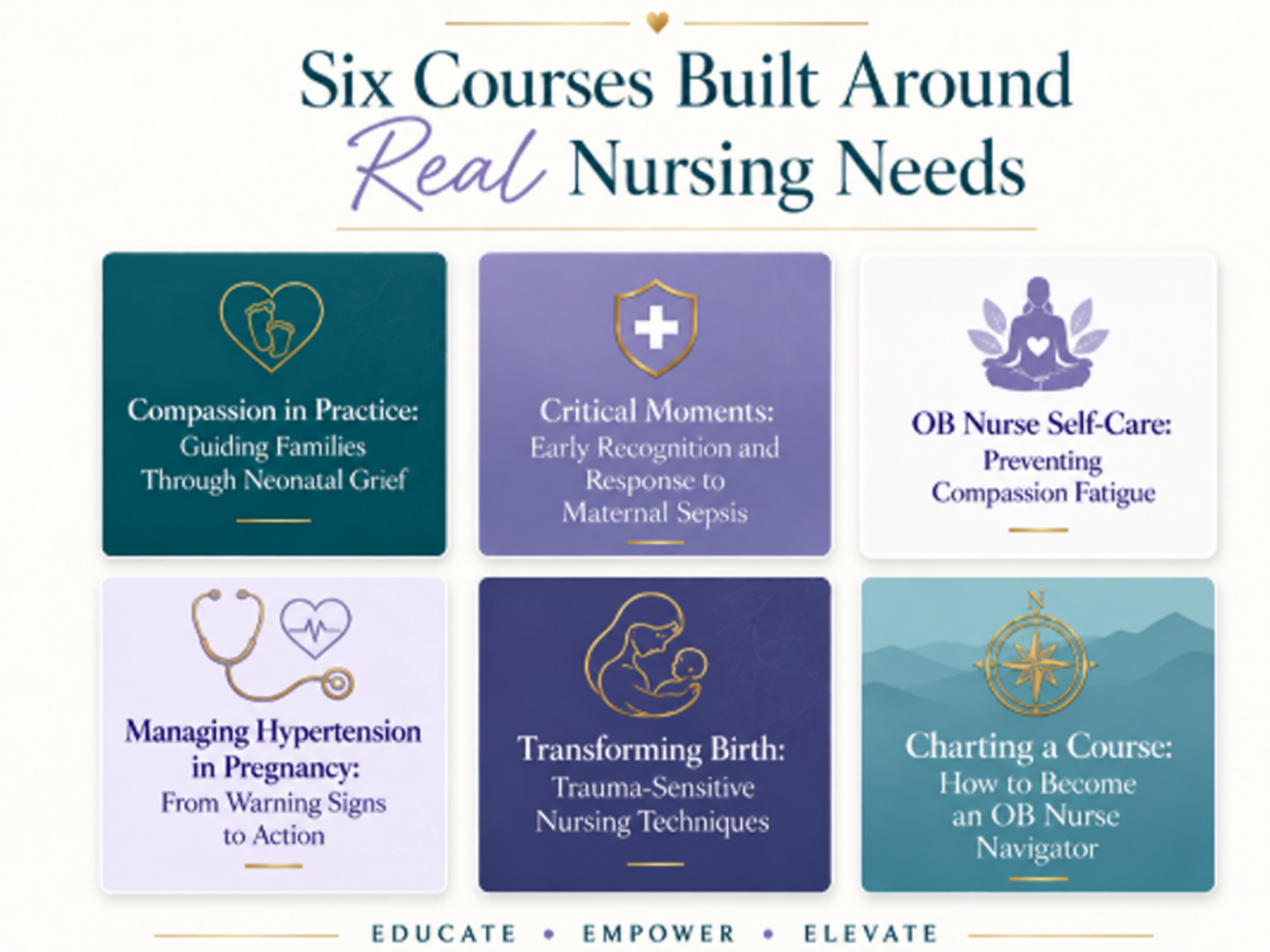
The six courses that came out of this process weren’t chosen randomly. Each one grew from something I’d witnessed, experienced, or recognized as a gap in nursing education.
They became:
Compassion in Practice: Guiding Families Through Neonatal Grief
Critical Moments: Early Recognition and Response to Maternal Sepsis
Managing Hypertension in Pregnancy: From Warning Signs to Action
Together, they became the foundation of the continuing education side of Altruistic Nurse Writer.
A Finished Course Should Look Simpler Than It Was to Build
A finished course may look simple to the learner, but making it clear, credible, accessible, and easy to use requires hundreds of decisions the learner should never have to notice.
Building six courses while recovering and managing ordinary life wasn’t a smooth, perfectly organized process. It moved forward in pieces until I had the time, system, and focus to bring those pieces together.
The biggest lesson wasn’t that I needed to work harder. It was that I needed to stop waiting for perfection, trust the process I’d created, and finish what I’d started.
The result wasn’t just six completed courses. It was proof that a difficult season could still produce meaningful work, one lesson, one recording, and one decision at a time.
The full course collection is available on the Continuing Education page.