
Building Nurse-Led Education with What Nurses Actually Need
When I began building continuing education courses, I knew the clinical content well. I had taught much of it informally at the bedside for years. What I didn’t fully appreciate at first was how much the delivery of education would matter, and how much I would learn by asking nurses directly what they actually needed.
This post is a look at that part of the process: what nurses told me, how their feedback shaped the courses, and what I learned along the way.
Content Is Only Half of Education
At the bedside, teaching happens naturally. Conversations unfold in real time, and information is shared as situations develop. Recording that same kind of learning requires far more intention. Pacing, structure, and how each concept connects to the next all begin to matter in a different way.
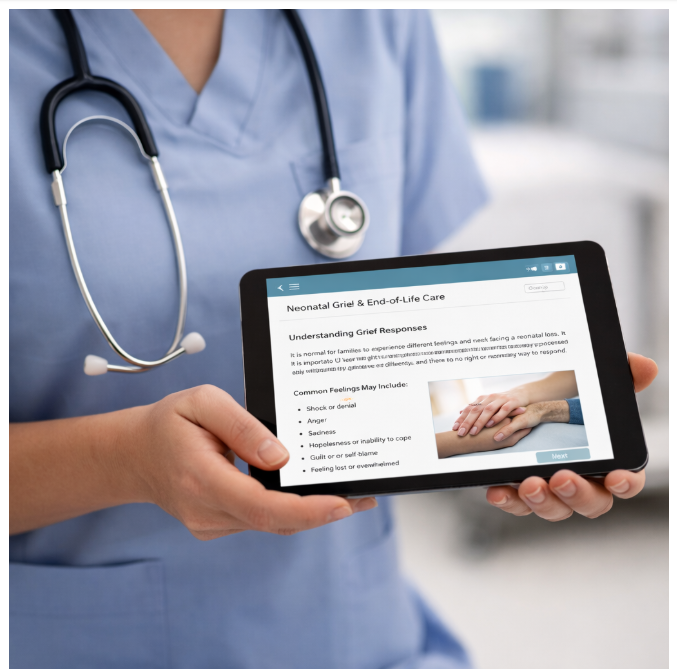
Developing my first course, Neonatal Grief in Clinical Practice, made that clear. The content felt familiar to write, but turning it into a clear, engaging, and easy-to-follow format was an entirely different process. I listened back to recordings, adjusted pacing, and reworked sections to improve flow and clarity. The goal was never to add more information. It was to make sure what was already there felt steady and connected from beginning to end.
That experience reinforced something I now believe strongly: how education is delivered can be just as important as the content itself. Delivery is where education becomes either usable or forgettable.
What Nurses Said They Want from Continuing Education
While building the courses, I asked nurses directly what mattered most to them when choosing continuing education. Their answers were remarkably consistent.
Above all, nurses want education that applies to practice. Content they can use during their next shift carries far more value than information that feels theoretical or removed from real patient care. Nurses are busy, skilled professionals, and they can tell quickly whether a course was written with real clinical work in mind.
Engagement matters too. Courses that feel passive or disconnected are hard to stay with, especially when time is limited. And time remains one of the biggest barriers of all. If a course doesn’t feel relevant or immediately useful, it is difficult to prioritize alongside long shifts, family responsibilities, and everything else nurses carry.
Many nurses also said they prefer shorter learning formats that still offer meaningful depth, rather than long sessions that are hard to complete in one sitting. And one gap came up again and again: support for nurse self-care and burnout. That theme surfaced not only in feedback but in practice, in the conversations nurses have with each other at the end of hard shifts.
How That Feedback Shaped the Courses
Nurses’ feedback directly influenced how the courses were built. The neonatal grief course was developed as a one-hour learning activity that can be completed in shorter sections, so nurses can fit it into the time they actually have. It also includes downloadable resources and practical tools designed for real clinical use, not just for passing a post-test.
The guiding principle was simple. Education should align with how nurses actually learn and work, rather than expecting them to adapt to a format that doesn’t reflect their reality. That approach allows for both flexibility and depth, depending on what each learner needs in the moment.
The feedback also shaped which topics came next. Trauma-informed care, compassion fatigue and nurse self-care, and early recognition of maternal sepsis kept emerging as areas where nurses wanted more support. Each reflects situations nurses encounter regularly, but that are rarely addressed in a structured, practical way. Those topics are now part of the course library, built on the same principles as the first.

The Learning Curve Behind the Scenes
Much of the work that goes into a course is invisible to the learner. Recording, editing, and platform setup all take time to work through. Some days everything moved forward smoothly. On other days, progress slowed due to technical challenges or interruptions. Integrating the courses with a learning platform so the experience felt smooth, functional, and accessible was its own project.
None of these steps show up in the final product, but they’re essential. A nurse completing a course after a long shift shouldn’t have to fight with the technology to learn. The goal was a learning experience that works well from the first click to the certificate.
Progress Over Perfection
Alongside the technical learning curve, there were moments of doubt. I questioned whether the course was good enough and whether it would truly meet nurses’ needs. I suspect many nurses who have stepped into a new role, whether as a preceptor, a charge nurse, or an educator, know that feeling well.
A conversation with a colleague helped put it into perspective. This work doesn’t need to be perfect. It needs to be useful. At some point, progress requires moving forward rather than refining indefinitely. That advice changed how I approached the final stages of development. Instead of chasing perfection, I focused on what mattered most: how the content sounds, how it flows, and how it will be experienced by the nurse on the other side of the screen.
Some parts of the work also became easier with practice. Structuring content and building slide materials grew more streamlined, and the process began to feel familiar. Like most nursing skills, it improved with repetition.
Education That Reflects How Nurses Work
Looking back, the most important lesson from this process is that good continuing education starts with listening. Nurses know what they need. They want education that respects their time, reflects their reality, and gives them something they can use at the bedside. They want depth without unnecessary length, and they want support for the emotional weight of the work, not just the clinical tasks.
That’s the standard I hold every course to. Each one is built to reflect how nurses actually think, work, and learn in practice, not just how education has traditionally been delivered.
Explore the Courses
If you’re looking for continuing education built around real clinical practice, I invite you to explore the course library, starting with Neonatal Grief in Clinical Practice.
And if there’s a topic you wish you’d had more support within your own practice, I’d love to hear about it. Your feedback continues to shape what comes next.
Thank you for being here and for supporting nurse-led education.
Jeanese Ex, RN, BSN
Founder, Altruistic Nurse Writer, LLC
Jeanese is an obstetric nurse and continuing education provider focused on nurse-led education for maternal-newborn clinicians.