Behind the Scenes at Altruistic Nurse Writer
Every business has an origin story, and mine began long before Altruistic Nurse Writer had a name. It began at the bedside, in conversations at the nurses’ station, in quiet hallways after difficult deliveries, and in the moments when a new nurse or student turned to me and asked, “How do you handle this?” I want to share a little of what happens behind the scenes here, how these courses came to be, and why this work matters so much to me.
Becoming a Continuing Education Provider
One of the milestones I’m most proud of is Altruistic Nurse Writer’s approval by the Florida Board of Nursing as a continuing education provider. Because Altruistic Nurse Writer is the provider organization, that approval allows me to offer continuing education to nurses across the United States.
Reaching that point took months of preparation and planning. There were standards to meet, processes to build, and many details that no one sees from the outside. But every step was in service of a simple goal: creating nurse-led education designed for real-world clinical practice, not just for checking a box.
Learning to Teach on Camera
Recording my first course taught me something I didn’t expect. Teaching on camera is very different from teaching at the bedside.
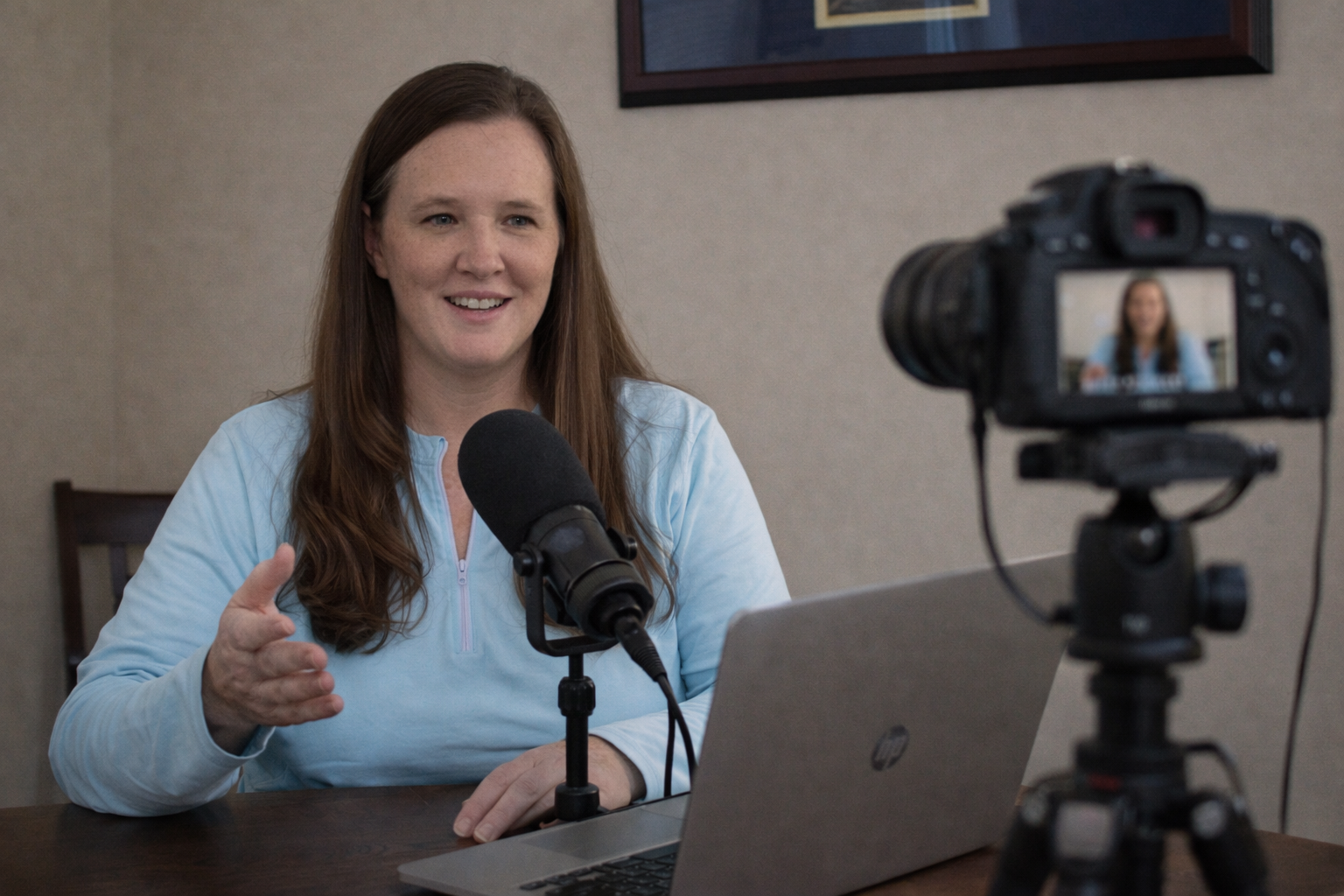
At work, teaching happens naturally. A student is standing beside you. A new nurse asks a question at the nurses’ station. You explain something in real time while caring for a family, and the lesson unfolds in the moment, shaped by the person in front of you and the situation you’re both in.
On camera, no one is standing beside you. Some days I felt a little like the teacher in the classroom scene from Ferris Bueller’s Day Off, taking attendance in an empty room. I listened back to recordings and thought my voice sounded monotone. I re-recorded sections more times than I’d like to admit. Editing became its own learning curve, and I slowly figured out how to use Descript to make everything flow.
There was also some imposter syndrome along the way. Many nurses know that feeling well: the quiet voice that asks whether you’re really qualified to be doing this. I pushed through it for a simple reason: I knew this content mattered.
Why This Education Matters
I’ve taught many of these same concepts informally at the bedside for years. Sometimes a student comes back months later and tells me they remembered something we discussed while they were studying for the NCLEX. Other times, a nurse shares that an experience on our unit helped shape their decision to go into obstetrics.
Those moments remind me that practical education shared nurse-to-nurse can have a real and lasting impact. So much of what we know as nurses is learned through experience rather than formal education. We learn by watching experienced colleagues, by working through difficult situations, and sometimes by getting it wrong and doing better the next time.
Experience will always be an essential teacher. But structured education in the areas nurses usually have to figure out on their own can strengthen both clinical confidence and compassionate care. That’s the gap I set out to fill.
The First Course: Neonatal Grief in Clinical Practice
The first course I created focuses on neonatal grief in clinical practice. It’s a one-hour learning activity designed to provide structure in a part of obstetric nursing that many of us learn only through experience.
One of the hardest situations nurses encounter is the admission of a family who arrives with no fetal heart tones. Everyone in the room knows the induction ahead will lead to a birth, but not the homecoming the family expected. In those moments, families often need space to begin processing what is happening. At the same time, nurses are balancing clinical tasks, documentation, assessments, and the quiet presence that grieving families need.
The Reality of These Moments
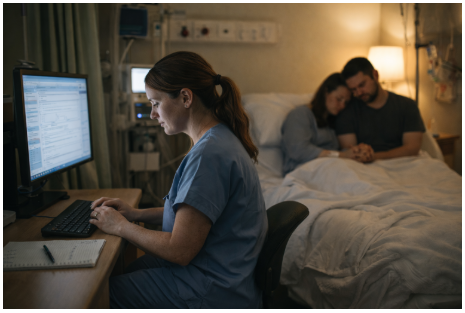
Much of this work happens in small, unscripted moments that rarely appear in a textbook. Sometimes charting happens quietly in the room after I say, “I’m here if you need me. I’m going to document a few things while you take some time. Please interrupt me if you need anything.” Other times, it happens just outside the room after I explain, “I need to complete some charting, but I’m close by. If you need me, please use your call light.”
Neither approach is right for every family. Knowing which one a family needs, and how to offer it, depends on emotional intelligence, communication skills, and careful attention to cues that are easy to miss. It also depends on a nurse’s ability to support a family while still caring for herself. These moments are rarely addressed in structured education, and yet they’re among the ones nurses remember for the rest of their careers.
After the Shift
Caring for families through loss doesn’t end when the shift does. For me, decompressing often means going home, hugging my kids, taking a warm bath, and letting the music in the car set the tone for the evening. Some days that’s Kenny G. Other days it’s Metallica, Carrie Underwood, or Ludacris, playing loudly while I sing along at the top of my lungs.

Every nurse develops her own way of releasing the emotional weight of these experiences, and those routines matter more than we often admit. Supporting families through loss requires presence, compassion, and resilience, and resilience is easier to sustain when we give ourselves permission to process what we carry.
A Free Resource for Nurses
If this topic resonates with you, I also created a free Neonatal Grief Clinical Guide for nurses. It’s a one-page, double-sided guide focused on practical language nurses can use when supporting families through neonatal loss. The goal is simple: to provide structure and support for moments that are emotionally complex and clinically demanding. You can download it here: Free Bedside Guide for OB and Neonatal Nurses
If you want to go deeper, the full Neonatal Grief in Clinical Practice course is available now, along with my other continuing education courses for maternal-newborn nurses: Compassion in Practice: Guiding Families Through Neonatal Grief
A Question for Fellow Nurses
What was your experience the first time you supported a family through neonatal loss? What mark did that experience leave on you as a nurse? These experiences shape us, and many nurses carry those memories with them for years. I’d love to hear your story.
Thank you for being here and for supporting nurse-led education.
Jeanese Ex, RN, BSN
Founder, Altruistic Nurse Writer, LLC
Jeanese is an obstetric nurse and continuing education provider focused on nurse-led education for maternal-newborn clinicians.